
Wikipedia’s Existential Threats Feel Greater Than Ever
Writing for WIRED on Wikipedia's 25th Anniversary
This is a newsletter from Stephen Harrison. You may know me from my journalism about Wikipedia; my novel, The Editors; or my more recent exploration of print culture. I post on Bluesky, X, and Instagram.
Since the day Wikipedia launched on January 15, 2001—exactly 25 years ago— pundits have been predicting its inevitable demise. Eric Goldman, a Silicon Valley law professor, confidently declared in 2005 that “Wikipedia will fail within five years.” Three years later, Google rolled out Knol, its own would-be encyclopedia, which was heralded by the press as a “Wikipedia killer.” By 2012, Knol was dead, and Google was quietly piping Wikipedia content into its knowledge graph. Other challengers like Citizendium and Everipedia have had little long-term impact. Meanwhile, the “free internet encyclopedia that anyone can edit” has become the background knowledge infrastructure for everything from search engines and voice assistants to AI chatbots.
Anyone predicting Wikipedia’s death in 2026 should remember the long line of failed prognosticators and competitors. And yet, within some corners of social media, the “death to Wikipedia” chorus sounds louder than ever . . .
Today is Wikipedia’s 25th anniversary, and I was honored to write an article for WIRED for the occasion.

More articles on Wikipedia @ 25
When I attended a Wikipedia conference in NYC last October, I met Darren Loucaides, a journalist who was covering the event for the Financial Times magazine. His FT article is likewise out today: “Wikipedia may be the largest compendium of human knowledge ever created, but can it survive?”
I appreciated how Loucaides captured a troubling incident involving a gun at the conference, using that as a springboard to discuss Wikipedia’s role in the culture. “The internet has made it feel like each of our tribes inhabit different, irreconcilable realities,” Loucaides writes. “And yet somehow, on Wikipedia, people manage to reach a consensus every day. How did that happen?”Christopher Henner is a 20-year contributor to Wikipedia and its sister projects. Over on Wikimedia, he posted an article, “Wikipedia at 25: A Wake-Up Call,” which makes the case that Wikipedia urgently needs to change course to meet the AI revolution.
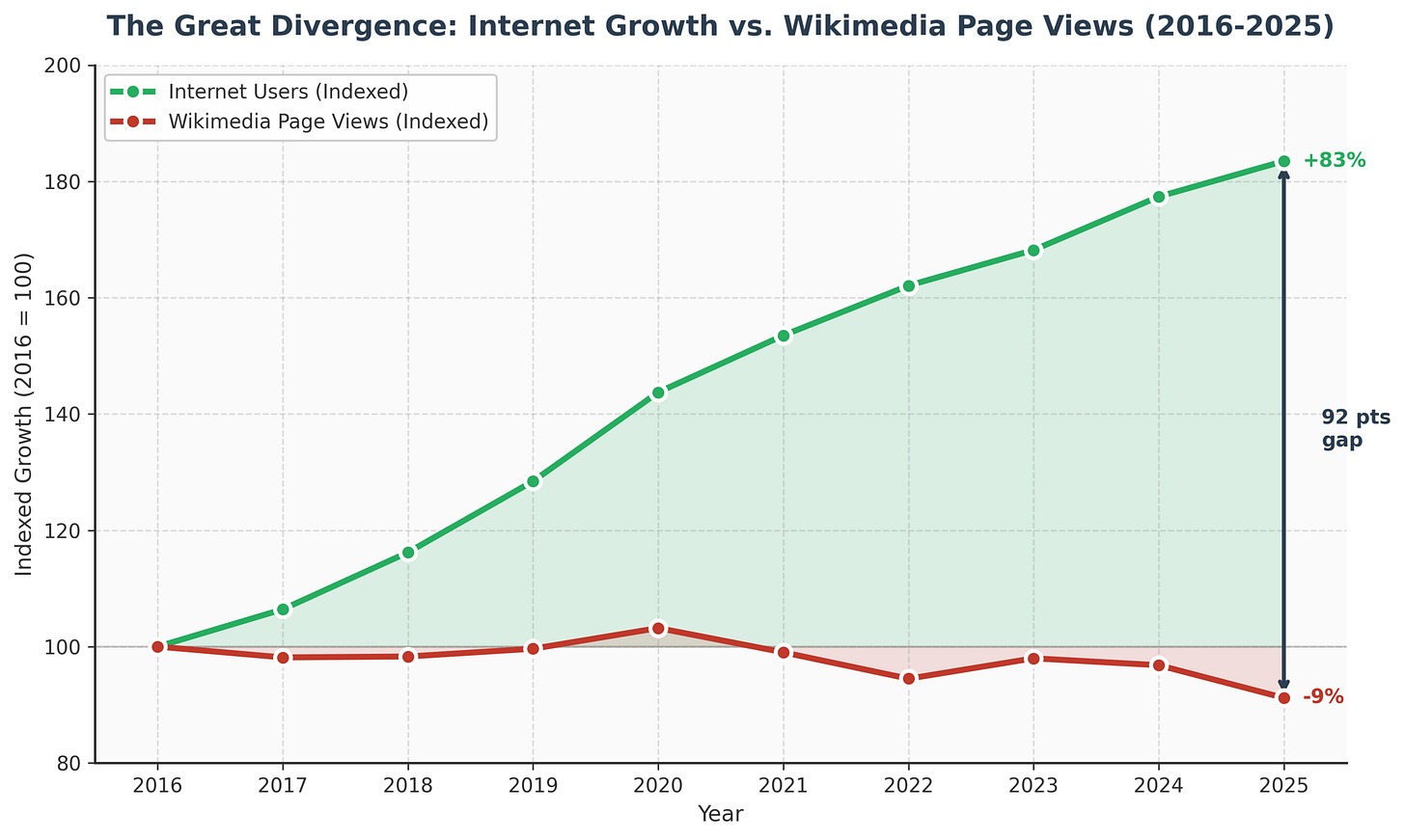
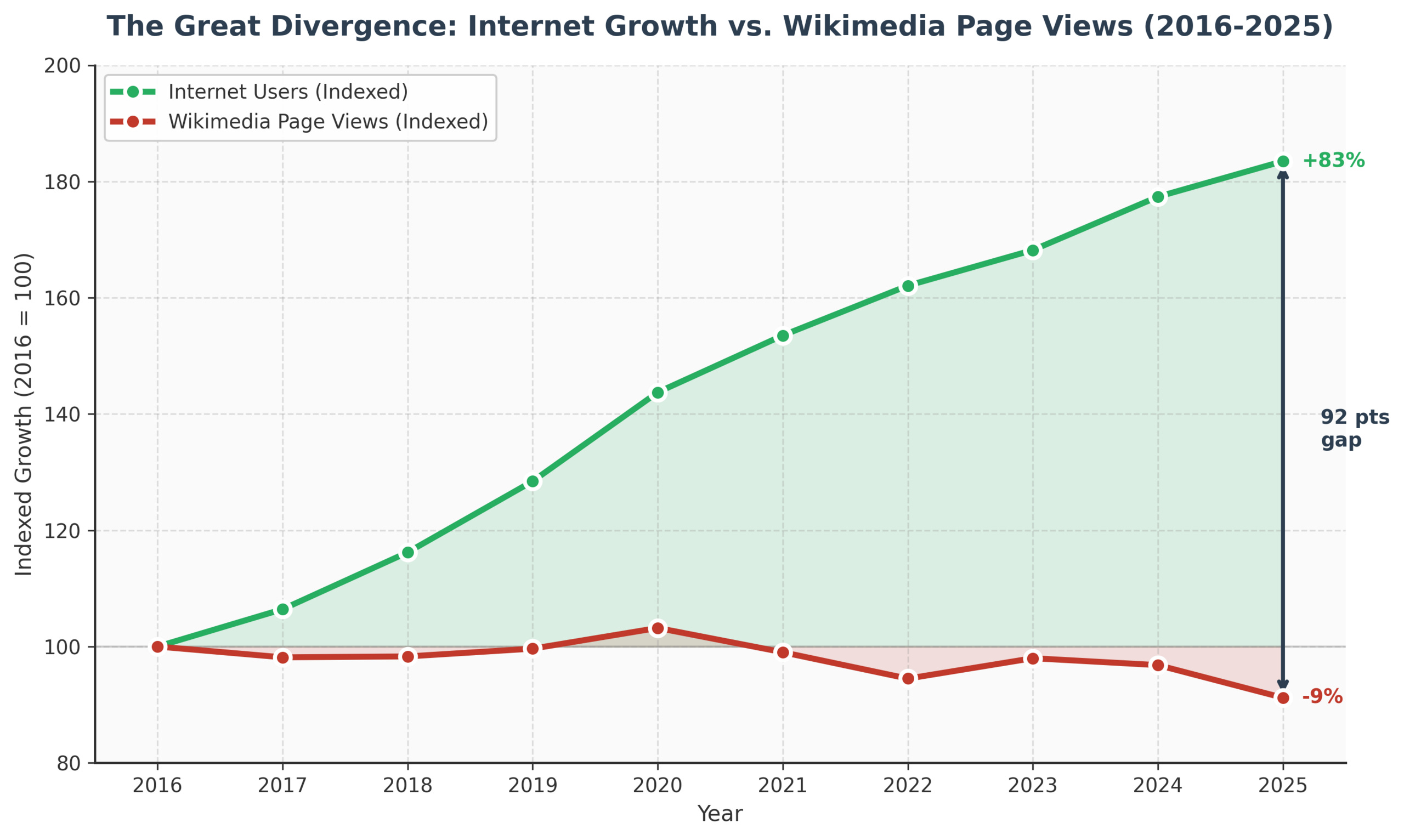
From Henner’s piece: “This is not an attack on what we’ve built. It’s a call to defend it by changing it. The Britannica didn’t fail because its content was bad. It failed because it couldn’t adapt to how knowledge distribution was evolving. We have an opportunity they didn’t: we can see the shift happening. We can still act.”
i would say look at the article on imane khelif (there is proof khelif is male!) to disprove the idea anyone can edit. they have blatant lies in the text so as to enforce an ideological agenda. and not only can no one edit it, no one can even discuss why it cant be edited
This article seems to make gross over generalizations about Gen Z’s opinion on open source contributing and their complacency (and zealous endorsement from your description) to the hyper capitalist hellscape that is the internet today.
The factual basis of these generalities seems weak and it ignores the real work done by thousands of hard working young people on many open source style projects every day (all of which are unpaid).
Things such as influencers and sponsored content are somehow connected to skepticism towards doing volunteer work? …bonkers
Do you think scientists work for the money? Do you think great artists or musicians are all in pursuit of the next paycheck?
I found this article deeply ignorant (or lazy) and I’m troubled that you would publish it to describe Wikipedias current situation.
Maybe you’re the one chasing dollars and cents with these clickbait articles rather than taking the time to understand the issues and inspire hope for the next generation…